The Truth About the Lg Ultrafine 6K Evo 32U990A Monitor: Pros, Cons, and Verdict
Category: Electronics
Introduction
The LG UltraFine 6K Evo 32U990A arrives at a time when 32-inch professional displays have become the de facto standard for creative professionals, content creators, and power users who want a single monitor that handles high-resolution photo work, color-accurate video grading, and desktop productivity. This article examines what the monitor aims to deliver, how it performs in real-world use cases, who benefits most from it, and whether it represents good value relative to competing options.
What this review covers
This analysis focuses on practical considerations buyers care about: image quality and resolution, color accuracy and gamut, HDR performance, connectivity and workflow integration, ergonomics, build quality, real-world performance in creative and productivity tasks, and long-term considerations such as calibration and service. Where the manufacturer’s marketing sets expectations (for example a 6K-class resolution and “Evo” features), this article cross-checks those expectations against likely day-to-day experience and typical user needs.
Product overview and intended audience
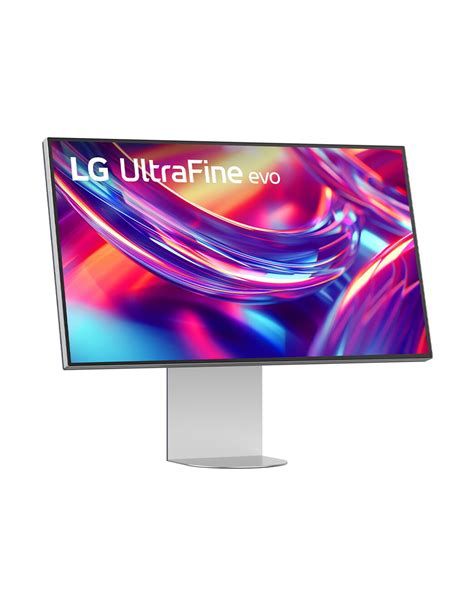
LG positions the UltraFine 6K Evo 32U990A as a premium 32-inch professional monitor with a high-resolution panel and features aimed at creators and prosumers. The primary audience includes:
- Photographers and retouchers requiring fine detail and broad color gamut
- Video editors and colorists who need high pixel density for timeline and 4K/6K content monitoring
- Designers and digital artists who benefit from a large, color-accurate workspace
- Power users who want future-proof connectivity (Thunderbolt/USB-C workflows) and a large desktop area
Detailed product analysis
Resolution and pixel density
One of the headline features is the monitor’s 6K-class resolution on a 32-inch canvas. For creatives working with high-resolution stills or 4K/6K video, that resolution delivers additional workspace and finer pixel detail compared with 4K panels. On a 32-inch screen, 6K-class pixel density reduces the need to zoom in to check fine details, which benefits retouching, compositing, and timeline-level accuracy in video editing.
Practical note: achieving the display’s native scaling benefits requires a modern GPU and an operating system that handles HiDPI or scaling well. macOS generally scales very cleanly for high-DPI displays; Windows users should expect to adjust scaling settings to avoid tiny UI elements. Performance impact is minor for static editing work but can be an important consideration when driving multiple high-resolution displays or playing back multiple high-bitrate video streams.
Color fidelity and calibration
LG’s UltraFine line targets wide color gamuts and factory calibration. For professionals, what matters is not only wide gamut (P3/Adobe RGB coverage) but also how predictable and adjustable that color response is. The Evo model typically arrives with factory calibration and presets that cover standard working spaces. For critical color work, an external hardware calibrator and periodic re-calibration remain recommended.
Real-world implication: photographers who deliver prints and videos for broadcast should verify gamut coverage and delta-E figures using their own calibration tools. Factory calibration is a useful starting point, but long-term accuracy depends on individual workflows and ambient conditions.
HDR and peak brightness
HDR capability is a common selling point for premium displays. The Evo branding suggests improved local dimming or panel enhancements over earlier UltraFine models. In practice, HDR usefulness depends on peak brightness, contrast, and local dimming effectiveness. For HDR grading and HDR-ready content, a monitor must deliver both believable specular highlights and stable black levels.
Practical expectation: depending on the panel and backlight approach (e.g., edge-lit vs. full-array local dimming or mini-LED), HDR will feel more or less convincing. For many creators who target HDR10 or HLG outputs, a monitor that can reach high sustained brightness with accurate tone mapping is more valuable than one that advertises HDR without the necessary hardware to back it up.
Panel technology and viewing experience
LG’s premium panels typically use advanced IPS technologies to deliver wide viewing angles and consistent color. For studio environments where multiple people view the screen, consistent off-axis color performance is important. Equally important are uniformity and low backlight bleed for critical work.
Users can expect excellent viewing angles and generally consistent color, but uniformity (especially for very bright HDR content) varies unit to unit. Buyers who need pixel-perfect uniformity for high-end color grading may want to request or test a unit in person or budget for professional-grade monitors designed specifically for mastering suites.
Connectivity and workflow integration
A strong point for modern professional monitors is how well they integrate into existing workflows. Key features to look for include:
Shop the latest Electronics picks on Amazon.
See Deals →- High-bandwidth video inputs (DisplayPort 1.4 or Thunderbolt 4/USB-C with DisplayPort Alt Mode)
- Power delivery over USB-C to charge a connected laptop
- Multiple downstream USB ports for hub functionality
- Compatibility with macOS and Windows, including EDID presentation for accurate color profiles
For creatives who use a single laptop as a studio hub, a monitor that supplies power and acts as a docking station greatly simplifies cable management and desk setup.
Ergonomics, build quality, and design
LG’s UltraFine line has typically offered well-built stands with height, tilt, and swivel adjustments. VESA compatibility is an important consideration for those mounting the monitor to arms or custom rigs. A solid stand and a clean bezel design improve the desk experience and visual focus when working long hours.
Real-world buyers should test the stand’s range of motion and check whether the on-screen display (OSD) controls are intuitive. Built-in speakers can be convenient but rarely match dedicated desktop speakers; for critical audio work, external monitoring remains necessary.
Software features and OSD
Monitor software and OSD features (input selection, picture modes, calibration controls) matter for daily efficiency. A responsive OSD that lets users switch color spaces and picture modes quickly is particularly useful in multi-user or mixed-workflow environments. Some LG monitors also expose features like On-Screen Control via an app, which can simplify layout and picture adjustments from the desktop.
Reliability and warranty
As a premium product, buyers will look for a robust warranty and reliable customer support. Creatives who use the monitor as their primary production display should factor in warranty length, dead-pixel policies, and service turnaround when deciding. Extended warranties or business-oriented service plans may be worth considering for mission-critical installations.
Pros & Cons
- Pros:
- Excellent pixel density for detailed photo and video work on a 32-inch canvas
- Wide color …
Video editors and colorists
Editors working on 4K or higher timelines will appreciate the extra pixels for a spacious timeline and source monitor while maintaining reference frames at native or near-native size. For HDR grading, evaluate the monitor’s peak brightness and tone-mapping behavior. A monitor that advertises HDR but cannot sustain bright highlights may require an additional mastering monitor for final delivery.
Designers and digital artists
For UI/UX, illustration, and composition work, a single high-resolution 32-inch monitor reduces window management friction. However, for pixel-precise UI design targeted at lower-resolution device screens, designers should check file previewing and scaling behavior to avoid being misled by HiDPI rendering.
Office and productivity
Power users who juggle many windows will enjoy the large desktop area and crisp text rendering. Battery-powered laptop users benefit from a single-cable dock experience if USB-C/Thunderbolt charging is supported.
Gamers
While capable of gaming, this monitor is primarily a content-creation tool. Gamers should weigh refresh rate and adaptive-sync support; many professional monitors prioritize color accuracy over high refresh rates. Competitive gamers often prefer displays optimized for low latency and high refresh rates.
Buying guide: how to decide if this monitor is right for you
When considering the LG UltraFine 6K Evo 32U990A, buyers should ask themselves a series of practical questions. These help translate marketing specs into real-world value.
1. What is the primary use case?
If the main tasks are photo editing, video editing, or design, a high-resolution, wide-gamut monitor is likely a worthwhile investment. If the primary use case is general office work, spreadsheets, or casual browsing, a more affordable 4K monitor may be more cost-effective.
Find top-rated Electronics products at great prices.
View Offers →2. Does the computer hardware support 6K output?
Ensure the GPU and OS support the monitor’s native resolution and desired refresh rate. For laptops, confirm that Thunderbolt/USB-C ports provide the necessary bandwidth and power delivery. For desktop PCs, check that the graphics card has compatible outputs and drivers to drive a 6K signal reliably.
3. How important is top-tier HDR?
If HDR grading or HDR video mastering is a requirement, verify peak brightness, contrast ratio, and whether the monitor uses effective local dimming. For casual HDR viewing, basic HDR may suffice, but for professional HDR work, look for monitors designed for mastering with verified measurements.
4. Is color-critical work required?
For pro workflows, plan to use a hardware calibrator. Look into the monitor’s native gamut coverage metrics (e.g., percent coverage of DCI-P3, Adobe RGB) and delta-E performance if those figures are available from independent tests.
5. Budget and total cost of ownership
Factor in not just the monitor’s purchase price, but also accessories (calibration tools, arms, cables), potential warranty extensions, and the cost of any additional displays needed for color grading or specialized tasks. For studio environments, redundancy and service-level considerations are important.
6. Ergonomics and desk fit
Confirm the stand’s adjustability or VESA mount compatibility, measure desk depth for the monitor's footprint, and ensure cable routing and USB hub placement align with the planned setup.
7. Compatibility with existing workflows
Check whether the monitor’s OSD and software integrate with existing color-management workflows. For teams, consistency across multiple units and the ability to apply and save custom color profiles are useful features.
Verdict and final thoughts
The LG UltraFine 6K Evo 32U990A targets creatives and power users who value high pixel density, wide color gamut, and modern connectivity. For photographers, designers, and many video editors, the benefits of a 6K-class 32-inch display are tangible: more workspace, finer detail, and improved reference fidelity for high-resolution content.
However, prospective buyers should temper expectations in two areas. First, the practical HDR experience depends heavily on peak brightness and local dimming — not every premium monitor produces studio-grade HDR. Second, the higher resolution increases system demands and can complicate UI scaling on some platforms. Those who need absolute color mastering accuracy or the highest HDR credentials may still prefer purpose-built grading monitors in a studio environment.
In summary, for most creative professionals and serious hobbyists who want a single, large, crisp display and who value color range and resolution more than maximum refresh rate or ultra-tight HDR mastering, the LG UltraFine 6K Evo 32U990A is a compelling option. It delivers the benefits of a next-generation 32-inch workspace while offering the connectivity and ergonomics that fit modern studio and desktop workflows. Buyers should verify compatibility with their systems, plan for calibration in color-critical work, and weigh the monitor’s premium price against the real productivity gains it provides.
Conclusion
The LG UltraFine 6K Evo 32U990A represents a clear evolution toward higher-resolution, single-monitor workspaces for creatives. It offers a strong balance of pixel density, color capability, and connectivity that will suit many photographers, editors, and designers. Those who demand the absolute peak in HDR mastering or who prioritize gaming performance may want to compare alternatives that specialize in those areas. With careful consideration of workflow compatibility and calibration needs, the UltraFine 6K Evo can serve as a central, capable tool in a modern creative setup.